Selected Work
My work tends to live where learning design, technology, AI, systems thinking, and real-world constraints meet.
These are a few projects that show how I approach that work: making complicated things clearer, turning ideas into usable systems, and designing for what happens after the first draft.
Learning Labs
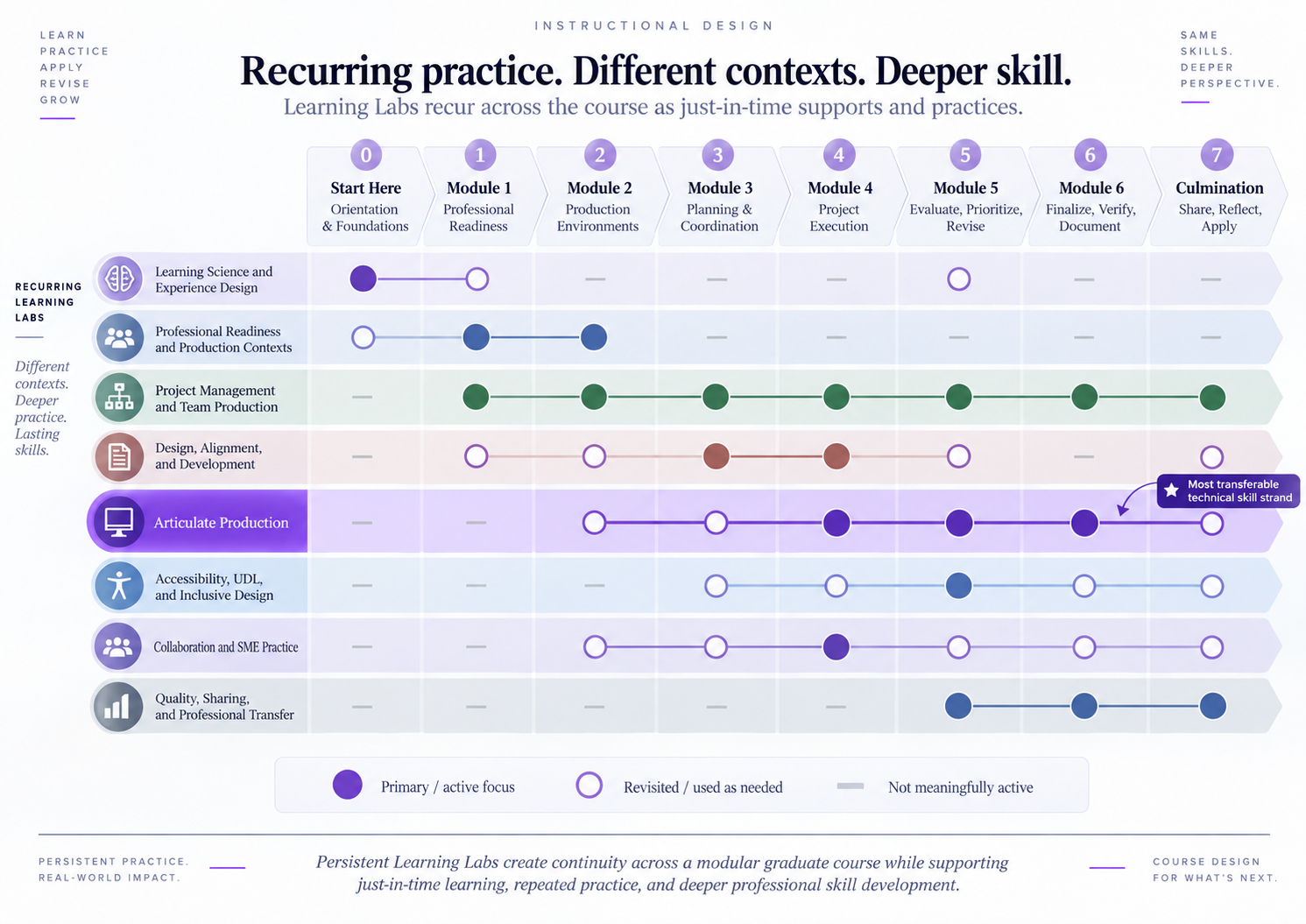
A semester-long project needed continuity across modules without forcing students through a rigid linear sequence. Recurring Learning Labs gave students a stable place to return for tools, practice, and just-in-time support.
Design move: create continuity through recurring structures.
Evidence: eight recurring capability strands return across the course when relevant, creating continuity without forcing a linear sequence.
Choice by Design
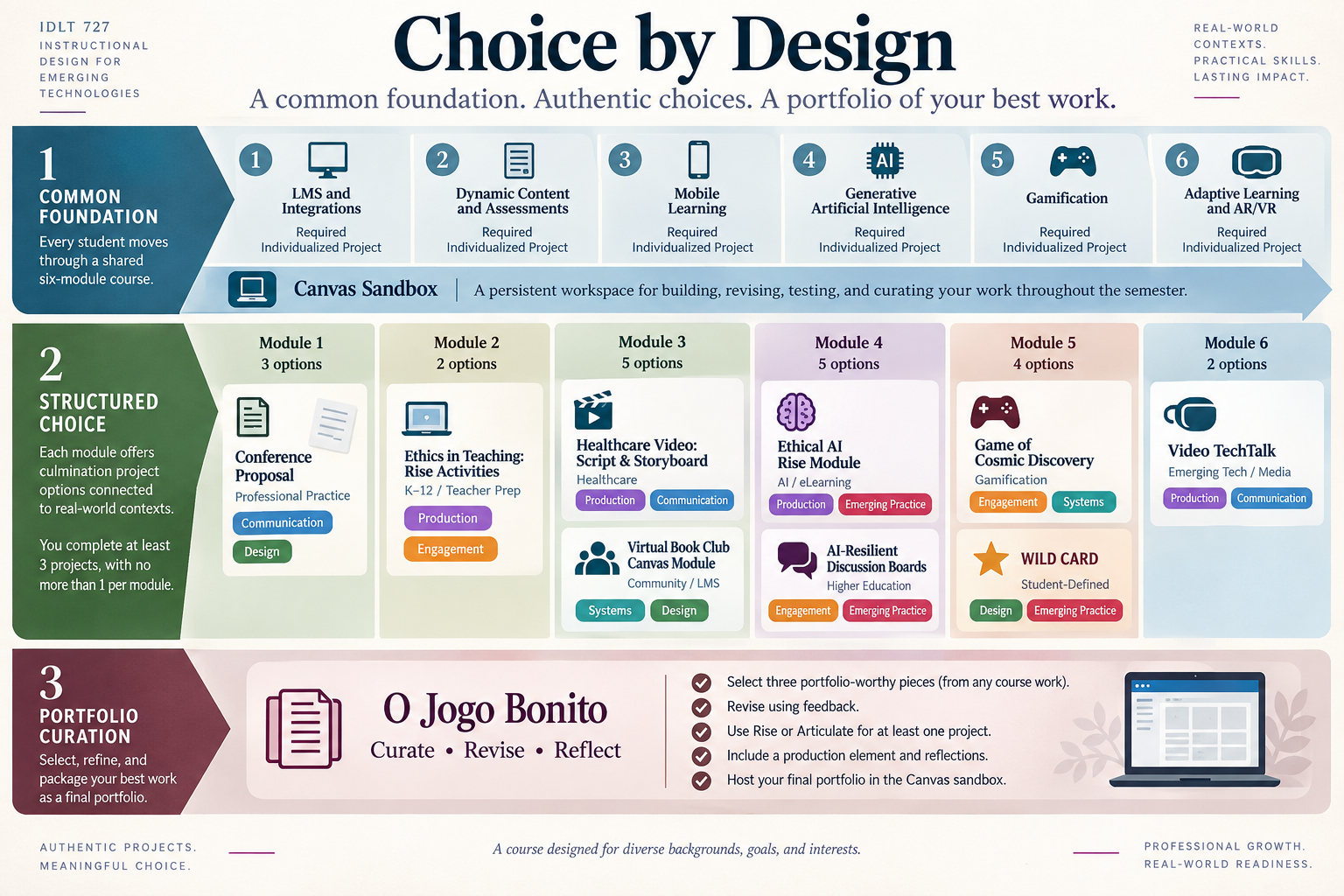
Graduate students arrive with different goals and different gaps. Instead of assigning everyone the same projects, students choose three from a larger set of authentic instructional-design challenges.
Design move: use structured choice to personalize professional growth.
Evidence: students move through a shared six-module course, choose at least three of 21 authentic Culmination Project options, and curate final work in a persistent Canvas sandbox.
Removing Time
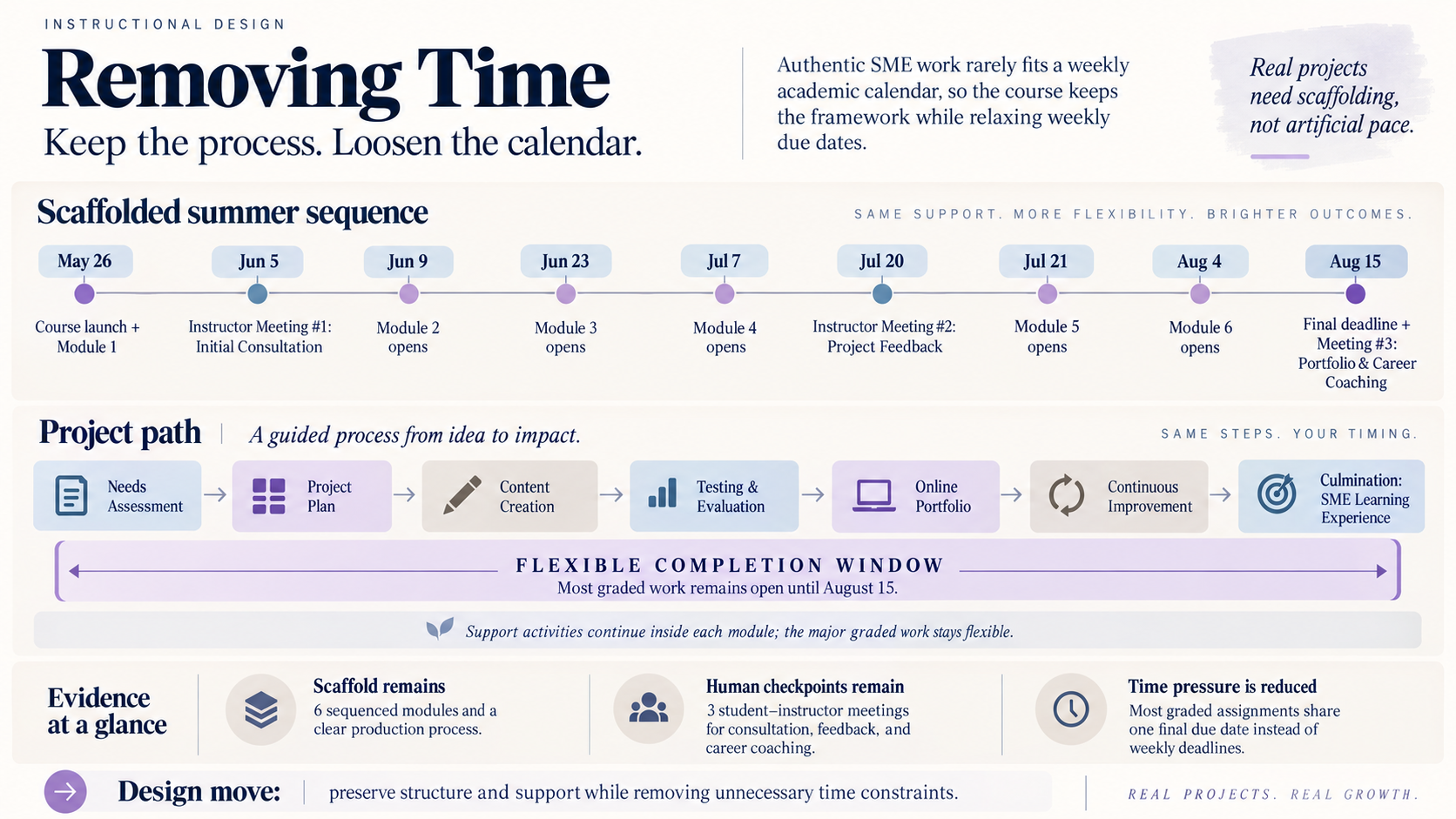
Authentic SME work does not happen neatly on a weekly academic calendar. The course keeps a clear sequence of modules, project stages, and instructor checkpoints, but removes most intermediate assignment deadlines so graduate students can coordinate around real summer schedules and SME availability.
Design move: preserve process and support while removing unnecessary time constraints.
Evidence: six scaffolded modules and three instructor checkpoints guide the work, while most graded assignments remain open until the final August 15 deadline.
Beyond the Classroom
Brand & Concept Design
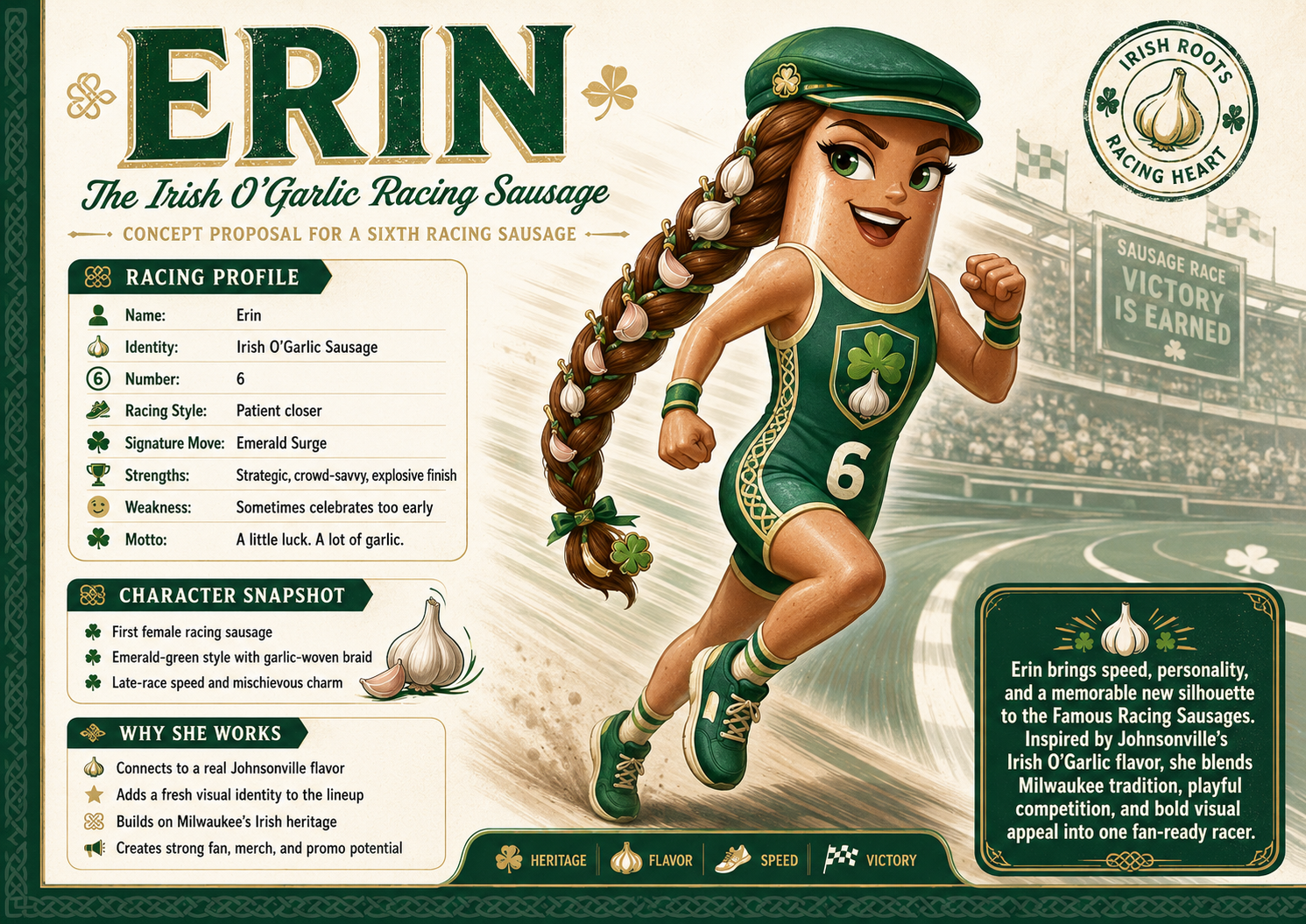
Erin: The Irish O’Garlic Racing Sausage
How do you add a new character to an iconic, decades-old brand without making it feel like a novelty bolted onto the side?
I developed a concept for a sixth Milwaukee racing sausage based on Johnsonville’s Irish O’Garlic flavor—researching the existing mascot lineup, brand traditions, visual language, personality patterns, and Milwaukee context before developing the character, racing identity, and marketing pitch.
Design move: extend an established brand by identifying its internal rules first—then create something new that still feels like it belongs.
AI Professional Learning
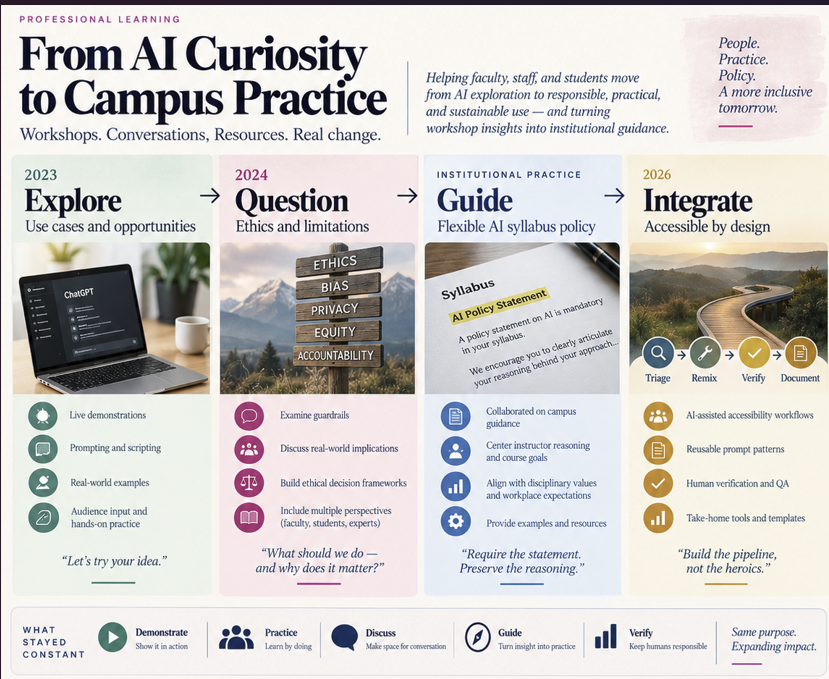
Over several years, I designed and facilitated AI workshops for faculty, staff, students, and professional audiences as the conversation evolved from use cases and prompting to ethics, policy, and AI-assisted accessibility workflows.
Design move: turn rapidly changing technology into practical, participatory learning that evolves without losing its human guardrails.
Evidence: live demonstrations, collaborative discussion, reusable prompt resources, flexible syllabus guidance, and repeatable accessibility workflows with human verification and QA.
Baseball Data Operations Leadership
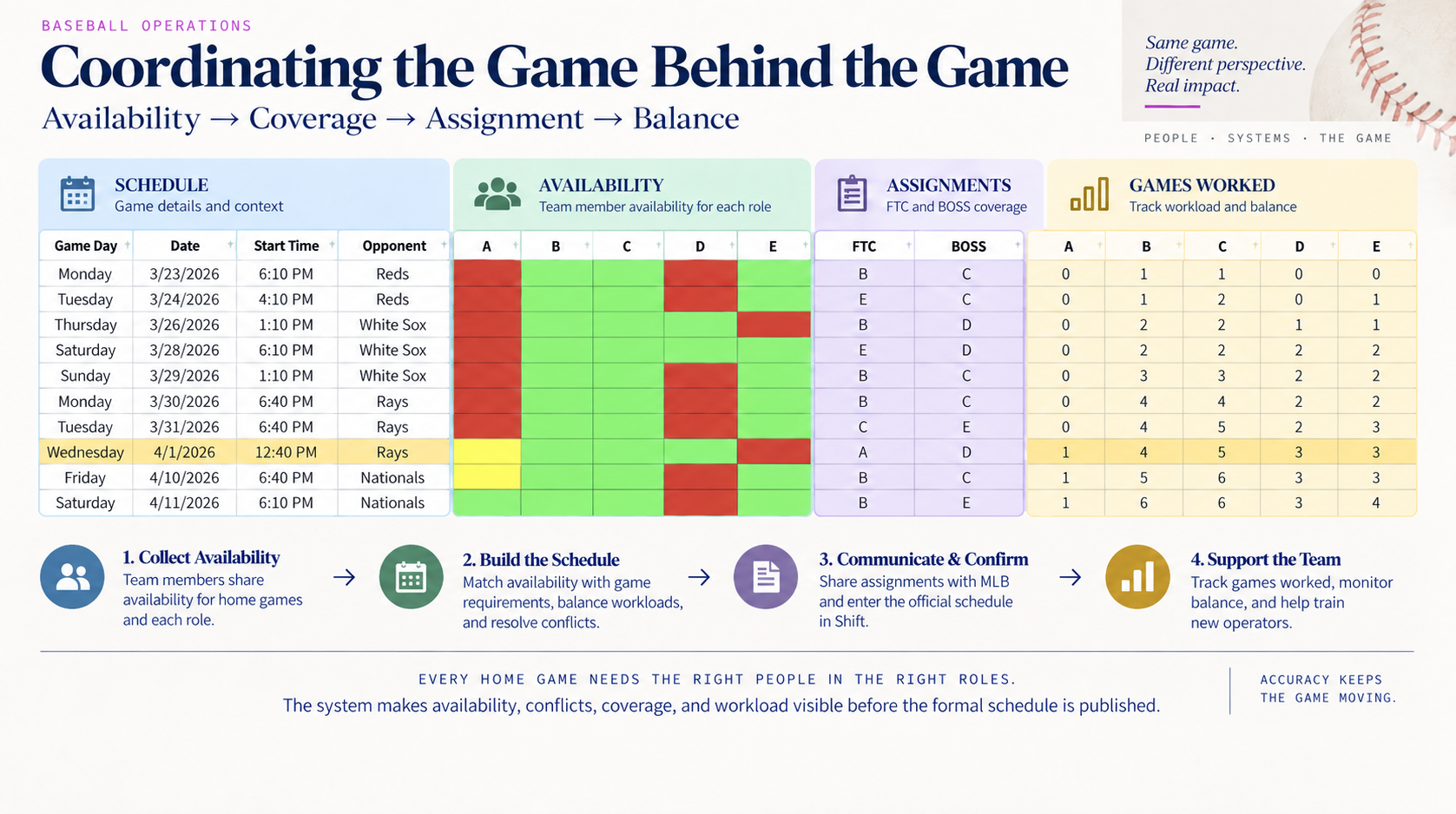
For twelve seasons, I’ve worked in MLB Data Operations in Milwaukee as a Field Timing Coordinator and Ball-Out-Strike System operator. I also coordinate the local FTC/BOSS team—building schedules, resolving conflicts, communicating assignments, and training new operators.
Design move: turn shifting availability, role constraints, and live-game requirements into a reliable staffing system.
Evidence: one shared workflow makes availability, assignments, conflicts, and workload balance visible before the official schedule is published.